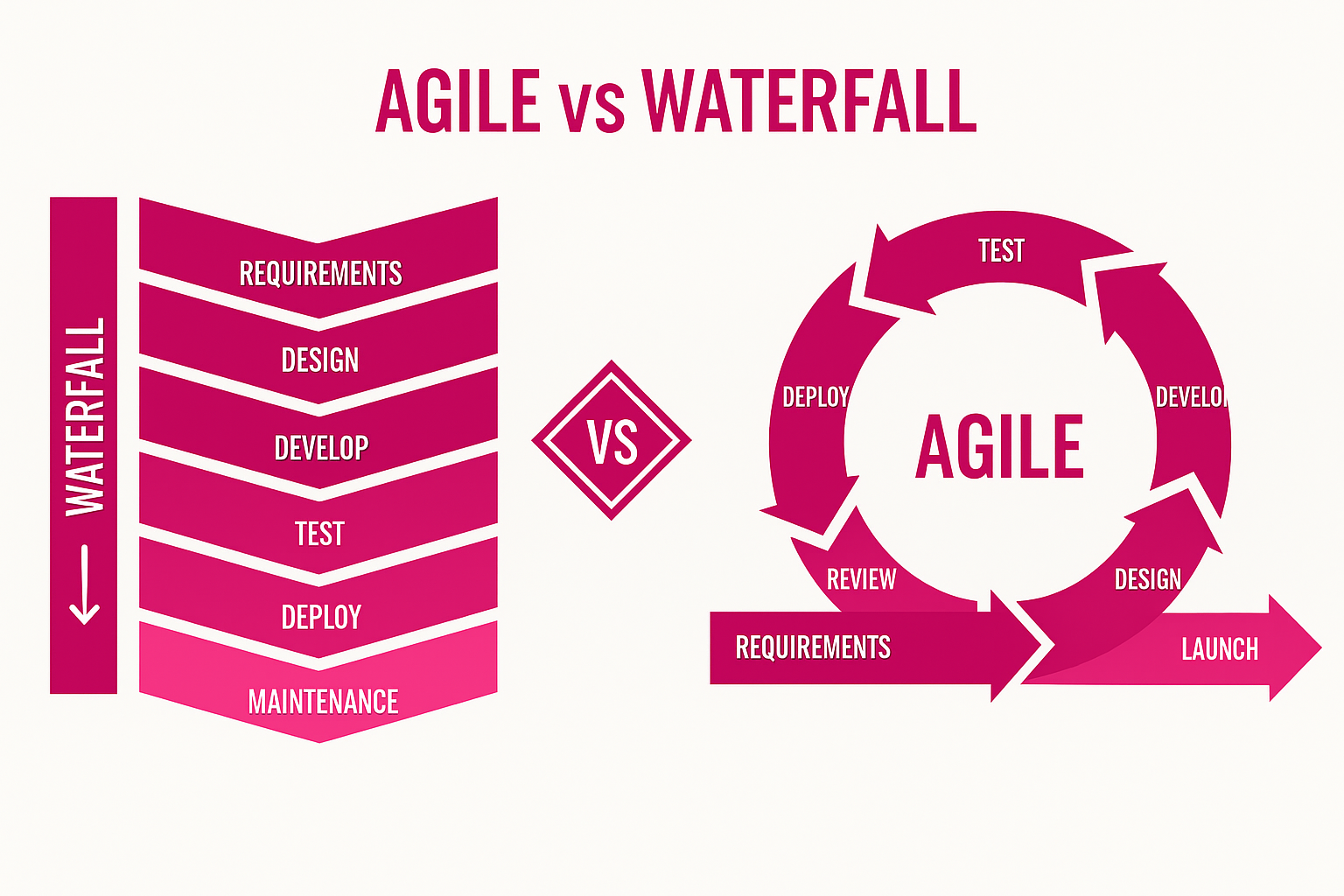
In the world of project management, choosing the right methodology can make or break a project’s success. The two most dominant approaches—Traditional and Agile—offer different philosophies, workflows, and outcomes. If you’re wondering – “Traditional vs. Agile Project Management: Which One to Choose in 2025?”, this guide will help you make an informed decision by comparing both methods across multiple dimensions.
Traditional project management, also known as the Waterfall model, has long been favored in industries where predictability, detailed planning, and compliance are critical. On the other hand, Agile project management, rooted in software development, offers flexibility, adaptability, and continuous improvement—traits highly valued in today’s fast-paced digital landscape.

Image: Traditional and a Scrum board.
Table of Contents
Origins and Core Principles of Each Methodology
Traditional project management originated in construction, manufacturing, and defense industries, emphasizing strict planning and process control. It operates in sequential phases: initiation, planning, execution, monitoring, and closure. Each phase must be completed before the next begins.
Agile emerged from the software industry, formalized by the Agile Manifesto in 2001. Its core values focus on individuals and interactions, working solutions, customer collaboration, and responding to change. Agile prioritizes working prototypes, team communication, and iterative progress.
Suggested image: Timeline graphic showing when both methodologies emerged.
Project Planning and Scope Definition
Traditional project management invests significant time upfront in defining the entire project scope, requirements, timeline, and budget. Deviations from the plan are discouraged and often require formal change processes.
Agile planning is more dynamic. It begins with a high-level vision and breaks the project into small, manageable increments called sprints. Detailed planning happens just in time, allowing priorities to shift as customer needs evolve.
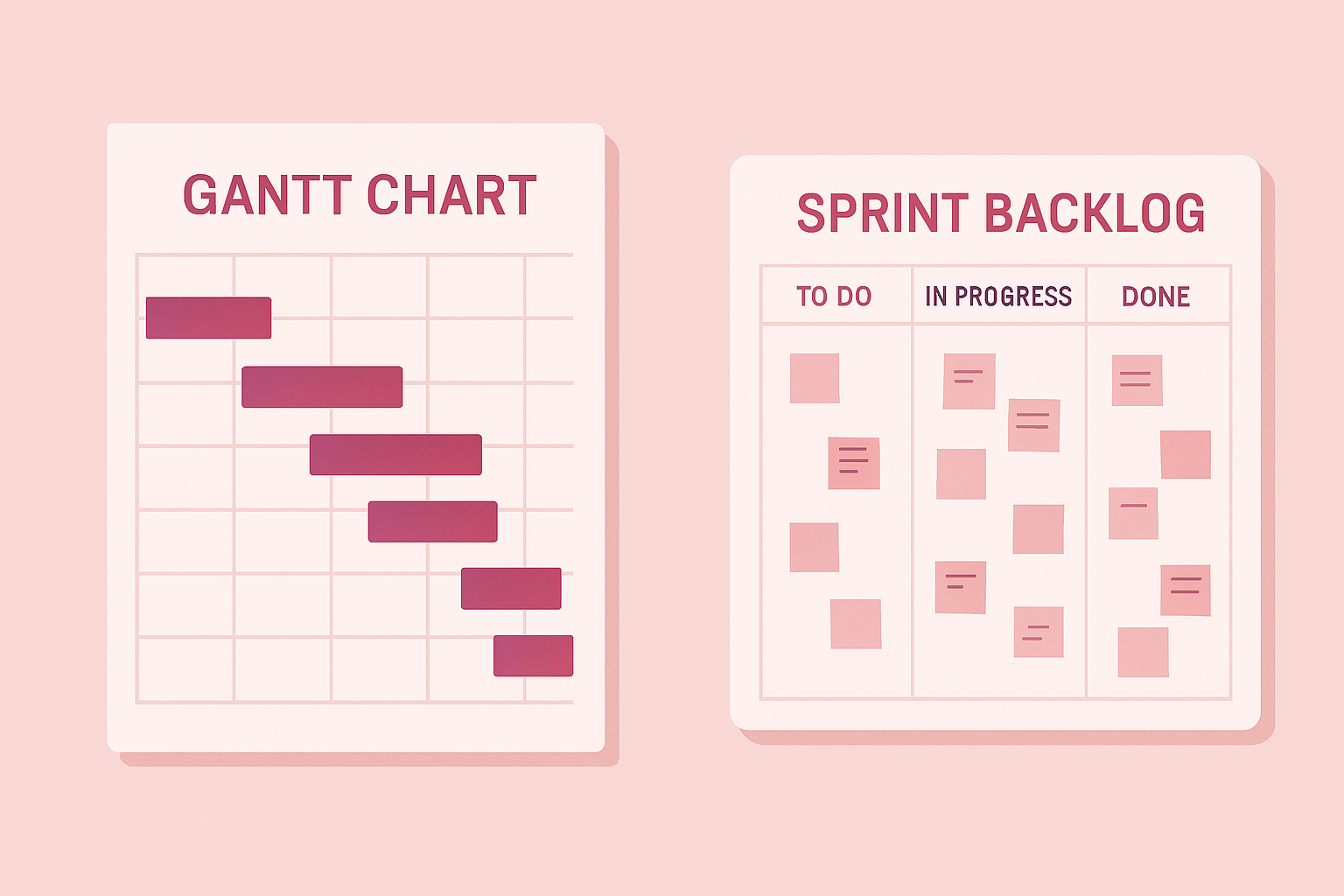
Image: A Gantt chart next to an Agile sprint backlog.
Team Structure and Roles
In traditional settings, teams are hierarchical. Roles are strictly defined—project manager, team leads, engineers—each with specific duties and limited decision-making outside their scope.
Agile teams are cross-functional and collaborative. They often include developers, designers, testers, and a product owner, all working together. The team is self-organizing, and leadership is more facilitative than directive.

Suggested image: Org chart comparison between hierarchical and cross-functional teams.
Flexibility and Change Management
One of the biggest differences lies in adaptability. Traditional PM is best for projects with clear, unchanging requirements. Changes during the process are seen as risks and can delay delivery or increase costs.
Agile thrives in changing environments. Teams welcome changes, even late in development, because Agile is built to handle uncertainty and evolve as feedback is received.
Timeline and Delivery Approach
Traditional projects deliver the final product at the end of the project cycle. This means stakeholders may not see results until months later, sometimes without early feedback opportunities.
Agile delivers value early and often. Teams work in 1–4 week sprints, shipping functional parts of the product regularly, ensuring alignment with customer expectations from the start.
Suggested image: Waterfall chart vs. sprint cycle illustration.
Customer Involvement and Feedback Loops
Customer involvement is limited in traditional methods. Clients are usually consulted during planning and again during final delivery. Feedback often arrives too late to make meaningful changes.
In Agile, customers are involved throughout. Their feedback shapes each iteration, allowing teams to course-correct early and avoid waste.
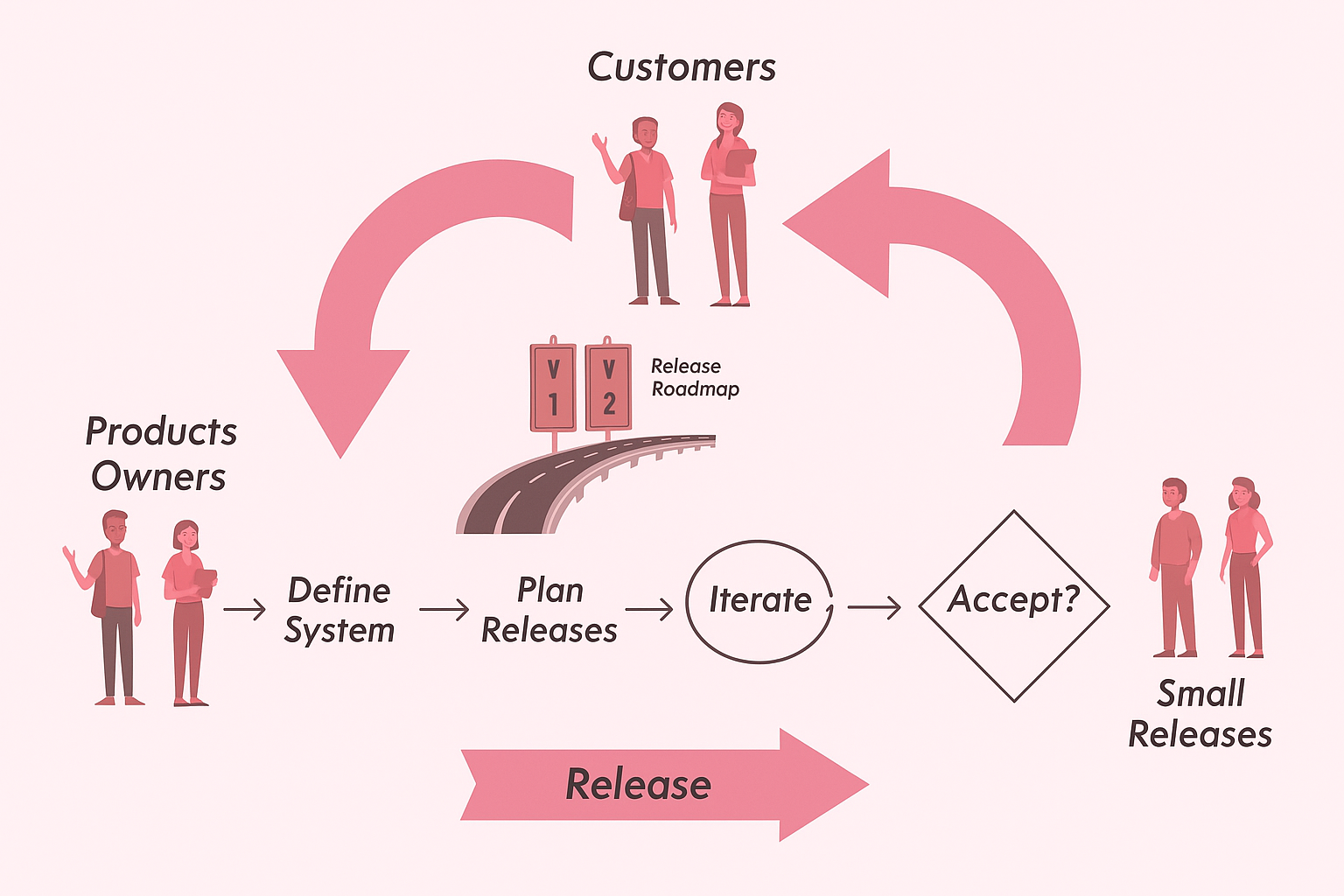
Image: A feedback loop or diagram showing client involvement in each sprint.
Risk Management and Issue Resolution
Traditional project managers try to identify all risks during the planning stage. While this proactive approach is useful, it can overlook unforeseen issues.
Agile manages risk continuously. Since deliverables are broken down and released incrementally, issues are spotted and resolved early, before they escalate.
Documentation and Compliance Requirements
Documentation is a priority in traditional project management. Detailed records are maintained for scope, change logs, progress reports, and quality controls—often required in industries with heavy regulations.
Agile prefers lightweight documentation, emphasizing working products over paper trails. However, it still includes essential documentation when needed, especially in larger organizations.
Tools and Software Commonly Used
Traditional tools focus on planning and tracking dependencies:
- Microsoft Project
- Primavera
- Excel-based Gantt charts
Agile tools support task collaboration, backlog management, and team communication:
- Jira
- ExcitingResource
- Trello
- Asana
- ClickUp
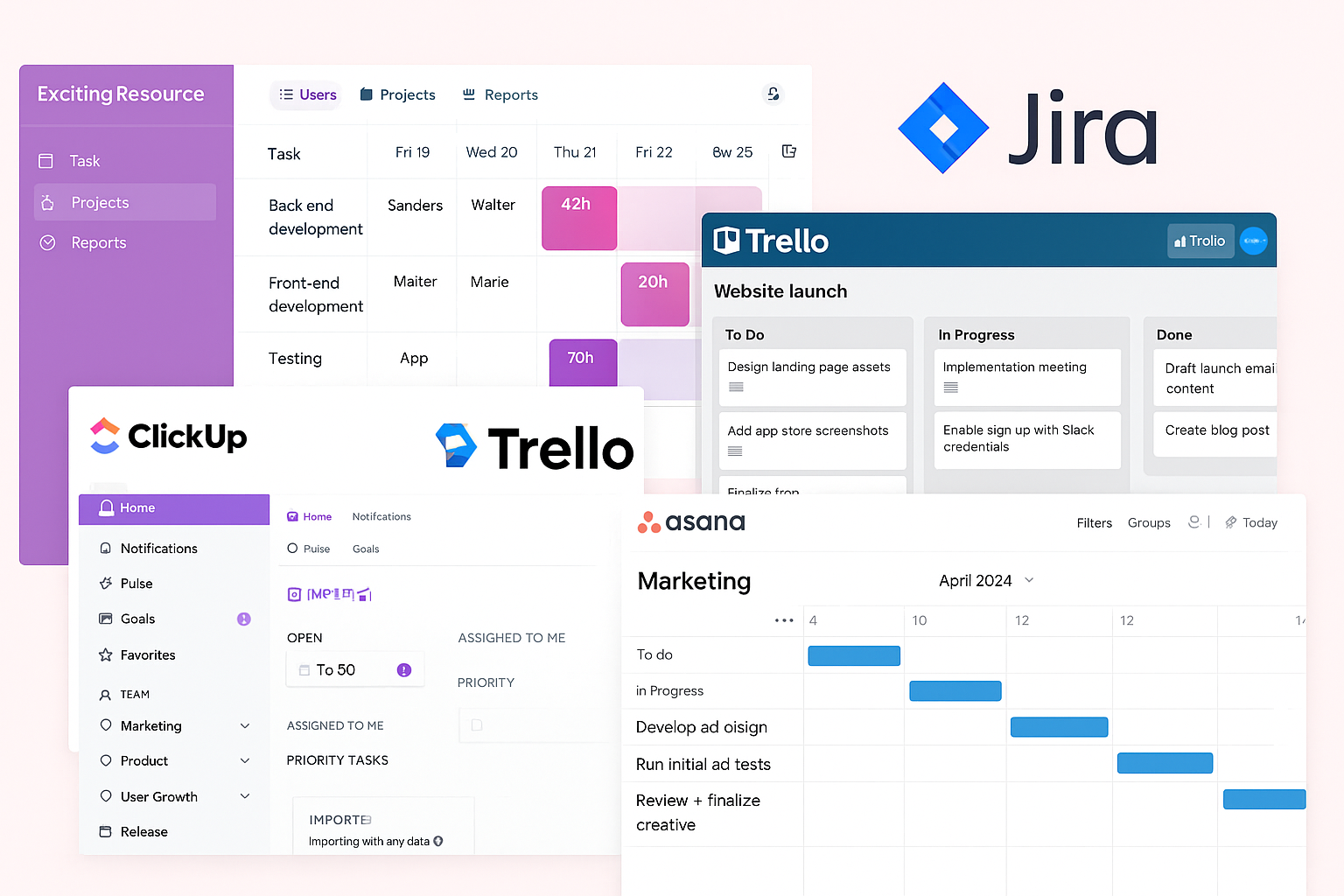
Image: A collage of popular tools used in both approaches.
Industry Suitability and Real-World Applications
Traditional project management is ideal for:
- Construction
- Engineering
- Healthcare
- Government contracts
Agile project management fits:
- Software development
- Digital marketing
- Product design
- Startups
Cost Estimation and Budget Control
Traditional projects are cost-estimated at the beginning and tend to follow fixed budgets. This is useful when cost predictability is crucial.
Agile allows more flexible budget planning. Because scope can evolve, budget is managed incrementally. This can lead to more efficient spending but requires closer monitoring.
Project Success Metrics and KPIs
Traditional success is measured by:
- On-time completion
- Staying within budget
- Meeting initial requirements
Agile success is measured by:
- Sprint velocity
- User satisfaction
- Product adaptability
- Working features delivered
Suggested image: Bar graph comparing success KPIs across methodologies.
Case Studies: When Each Approach Works Best
A city council contracted a firm to build a new public transportation terminal. With strict zoning laws, fixed budgets, and rigid milestones, a traditional method ensured accountability and predictability.
On the flip side, a tech company developing a mobile health app used Agile. Weekly sprints, regular user feedback, and rapid testing allowed them to release MVPs quickly and scale with confidence.
How to Decide: Traditional vs. Agile Project Management for Your Team
Here’s a quick way to choose:
- If your project has clearly defined goals, a fixed budget, and minimal expected change → Traditional PM is better.
- If your project needs flexibility, continuous feedback, and speed to market → Agile PM is ideal.
Hybrid approaches are also popular. Many companies plan budgets and governance using traditional methods but execute in Agile sprints for greater responsiveness.
Final Thoughts
When asking “Traditional vs. Agile Project Management: Which One to Choose?”, the answer depends on your project type, risk tolerance, customer needs, and organizational culture. Both methodologies are valuable—when applied to the right context.
Traditional project management gives structure, reliability, and control. Agile delivers adaptability, speed, and user-centric value. In many modern projects, a hybrid approach may offer the best of both worlds.